
The Outback Loop
The Outback Loop can be sorted into three main loops and itineraries are basically the three big tracks – Birdsville/Strzelecki/Oodnadatta.
-
The Full Loop
From Parachilna to Arkaroola, Innamincka, Birdsville, Simpson Desert, Dalhousie Springs, Mt Dare, Oodnadatta, William Creek, Marree, to Parachilna.
-
The Birdsville/Innamincka Loop
From Parachilna to Arkaroola, Innamincka, Birdsville, Mungerannie, Marree, to Parachilna.
-
The Oodnadatta/Birdsville Loop
From Marree, to Mungarannie, Birdsville, Simpson Desert, Dalhousie Springs, Mt Dare, Oodnadatta, William Creek, to Marree.
Naturally, you can start and finish wherever you like and, of course, you don't have to do an entire loop — just what appeals to you. You can even create mini loops if you like.
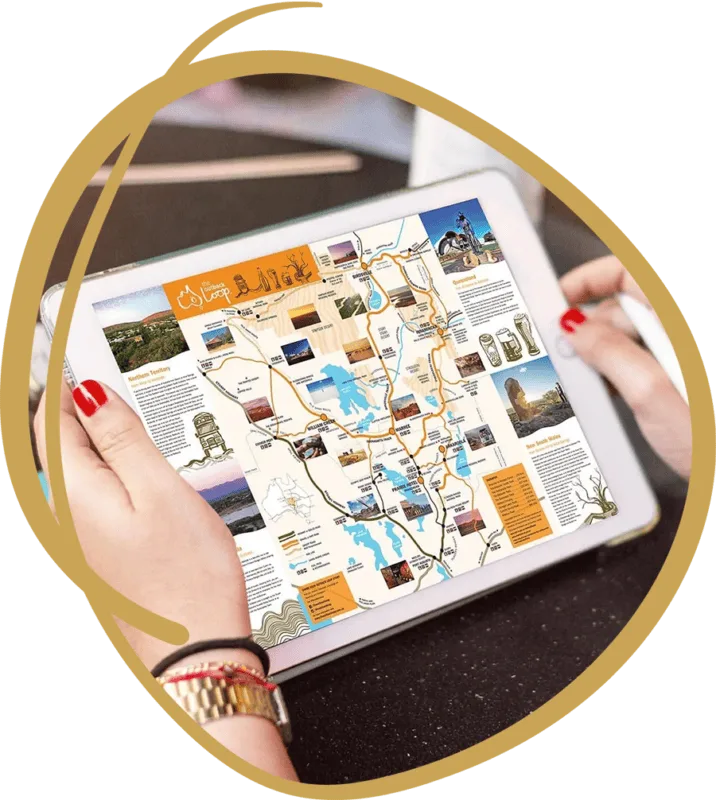
Get the map
Your can get a free copy of The Outback Loop Map from the official Outback Loop website.
FAQs
The short answer is 10 to 14 days but it depends on a few things. Where are you coming from – if driving from the eastern seaboard you’ll need to take into consideration big distances before you get to the beginnings of the Loop and that there’ll be things to see and do in the regions on the way through.
Your itinerary’s focus will also be a factor.
We suggest that you spend a couple of days in locations such as Arkaroola, Innamincka, Birdsville, Marree and Coober Pedy. And an overnight stay and a flight is a must at William Creek while the Pink Roadhouse is a quirky fuel-up stop on your way to Mount Dare, Dalhousie and Munga-Thirri Simpson Desert. The desert leg of the Loop is for confident, experienced and well-prepared travellers so allow extra time.
Yes – Outback Australia is a safe place (despite what you might have seen or heard).
Before you embark on your outback adventure learn as much about it as you can, understanding that you are travelling to a remote area with limited communications. Have a travel plan and pack for unexpected delays. Find out before you leave what facilities are available, including availability of fuel.
Carry water (we suggest 6 litres per person).
Yes – families with children are most welcome. We suggest that you research your travel itinerary with the kids so that they get the best out of their outback adventure. Roaming the outback can mean being off grid for many hours at time and there are long distances between towns.
Note: Licensed premises have rules about children being supervised as a legal requirement.
Anytime from April through until the end of October. Most travellers choose to avoid the summer extremes of temperature.
Munga-Thirri Simpson Desert National Park is closed to all travellers during the summer months.
Walkers Crossing is also closed to travellers from December to March.
Rain closes roads and whilst not unheard of rain in the outback is less likely during the winter months. Get into the habit of checking the BoM to give up-to-date weather reports, you’ll find that you can predict road closures based on probability and extent of rainfall.
It depends on where you’re coming from! Thinking of a day trip from Innamincka? Then we suggest that you take to Old Strzelecki Track to the Merty Merty turn-off then proceed to Cameron Corner via Bollards Lagoon.
Be familiar with your vehicle and understand its capabilities.
The main roads on the Outback Loop are unsealed. You’ll be driving on a dirt road with rough surfaces, corrugations, stones and in some stretches, there will be pot holes and bulldust.
A low clearance sedan or compact smaller vehicle suitable for urban roads is not a suitable drive option for any roads on the Outback Loop.
Your vehicle needs to be reliable, serviced and equipped to endure the robust driving conditions you may experience. Make sure you know how to change a tyre and have at least one spare.
It’s wise to travel with a tool kit, a first aid kit and a satellite phone, compact vehicle fire extinguisher.
The short answer is yes! But the number one rule is to drive to the conditions and an off-road or semi-off-road van is the best option. The reason for the note about van type is that vans built for outback travel will have protective features to guard against stone damage to water tanks, hoses and pipes fitted to your van. Advice regarding tyres – most towers travel dirt roads with 30psi to give the van a better ride and to help in sandy sections on the road. Always consider a stone guard mounted on the front of your van or rear window protection on your vehicle to reduce the risk of unnecessary stone damage.
Yes – however like all things regarding outback travel it’s best to be prepared and understand that some hotel licences do not allow dogs in their service and public areas, that National Parks do not permit dogs and at all times be sure to keep your dog/pet controlled. We suggest that you contact venues directly if you are travelling with your pet and require accommodation.
Top travel tips
Follow @aussietravelcode and adhere its 'Code of Conduct' and four key messages:

- Don't rely on Google Maps – take time to research your intended route and let someone know your intended itinerary.
- It's against the law to drive on closed roads.
- Leave all gates as you find them and treat station owners with respect.
- Do not use station tracks unless you have permission.
- Check road conditions before you leave – better still learn the BoM, rain means closed roads.
- If you experience problems stay with your vehicle and have top level roadside assist with RAA/RACQ or similar.
- Rubbish – take it with you and dispose of it at a proper refuse facility, preferably using recycling facilities in towns like Birdsville and Innamincka.
- Much of the region is without designated camping spots – Public Access Routes (PAR) are bush tracks and camping is permitted within 100 metres of a PAR.
- That being said: detours from the tracks and damage to the vegetation can take years to recover.
- The lands you are travelling through may be pastoral leases and/or will have cultural significance to Traditional Owners.
- Without permission, camping is not allowed on pastoral leaseholds. The land either side of the tracks is pastoral land so take care not to camp near stock water points – local landowners usually clearly sign water points.
- We share the desert with wildlife, so take care when you're choosing your campsite that you're not taking a water source from native animals who want to drink.
- If you are washing make sure soap and detergent does not find its way into the waterhole.
- Should you camp near an artesian spring take care to ensure soap/shampoo doesn't contaminate the springs as the springs contain rare species of fish and other aquatic life.
This response is not meant to be finger wagging – it's simply about caring for the fragile landscape that you are travelling through.
Rule of thumb is to stick to the tracks, be prepared (wash points are best found in towns such as Marree/Birdsville/Innamincka/William Creek) and regarding rubbish – you'll find refuse bins in most outback towns. Minimising waste in the first place is a big tick in the outback.


Now for some inside info
By Jo Fort, hotel co-owner
-
Camping on the Birdsville Track – I love Cooper Creek, even in the busy tourist season you'll find a secluded spot. There are toilets there as well.
-
Strzelecki Track – I quite like the Strzelecki Crossing but there's also a nice area at Blanchewater Ruins. The Art Baker rest area is also a favourite spot of mine. At this stage there is no infrastructure on the Strzelecki Track.
-
Oodnadatta Track – to be honest I've never camped on the Oodna Track as I've always had a good reason to stop at the William Creek Hotel. Coward Springs is quite nice (though not free camping), further north The Pink Roadhouse will point you to free camping if you're heading to Dalhousie.
-
Cadelga Ruins between Innamincka and Birdsville is also lovely.
To be honest – you'll be spoilt for choice if you're looking for big horizons and wide open spaces, all you need to do is to be prepared and adhere to the ground rules of respect/staying on or near the track and disposing of rubbish and biowaste responsibly.
I highly recommend www.outbacktravellers.com.au. Their publications and maps will help you with your planning.
Travel safe,
Jo